
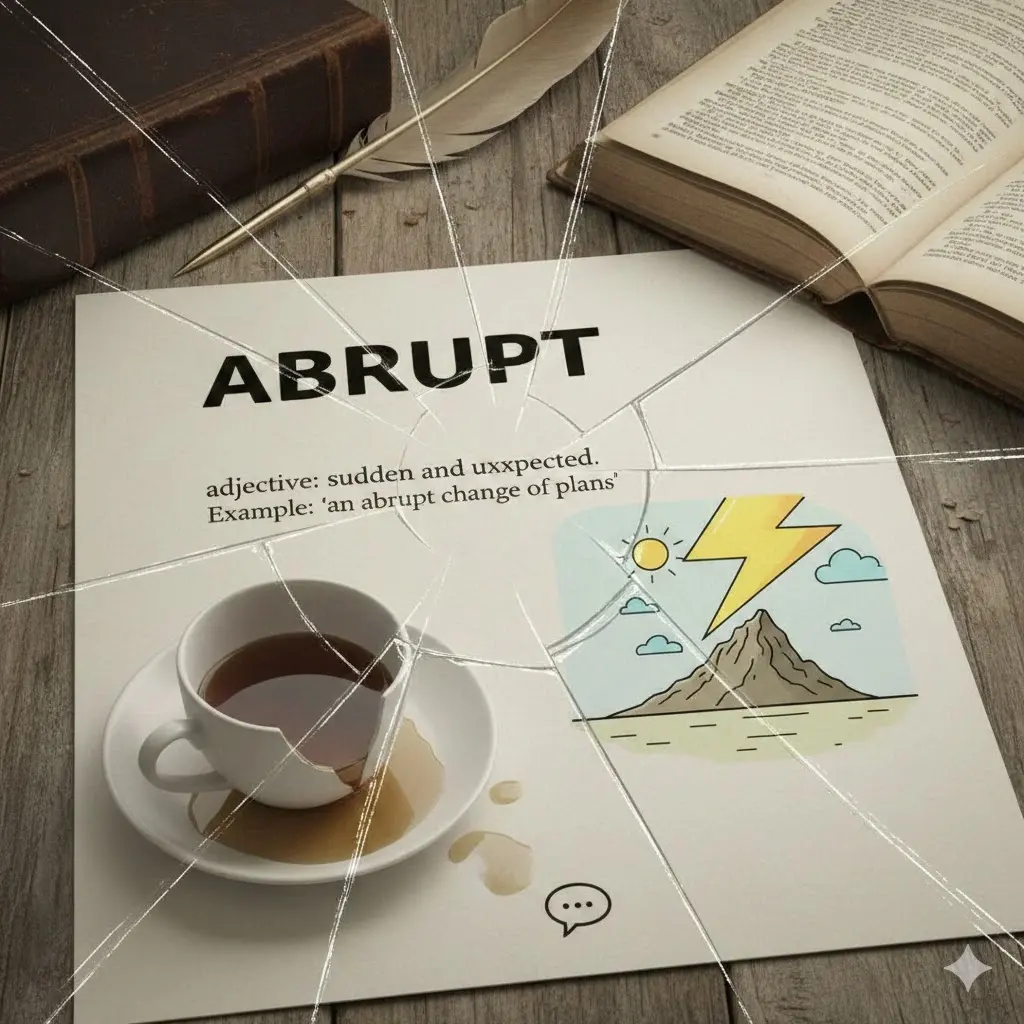

Have you ever been in a conversation, laughing and talking, and suddenly someone cuts you off or leaves without any warning? I’ve been there, and let me tell you—it feels jarring, almost like the world just hit pause.
That’s exactly what “abrupt” is all about. I remember one time, during an important meeting, my colleague ended the discussion in the middle of a sentence, and I was left staring at the screen, completely thrown off.
At that moment, I realized how powerful and unsettling abrupt moments can be. In this article, we’ll dive into what “abrupt” truly means 💬, explore its nuances, and see how it shows up in our everyday lives—sometimes subtle, sometimes impossible to ignore.
What Does Abrupt Mean in Text? 🧠
The word abrupt originally comes from formal English, but it’s made its way into casual texting, social media, and online chats. In texts, it often describes messages, responses, or actions that feel sudden or curt.
Example:
A: “Hey, did you finish the project?”
B: “Yes. Done.”
Here, B’s reply can be described as abrupt—short, quick, and a little blunt.
In short: Abrupt = sudden/short = unexpectedly brief or blunt in tone.
So, when someone texts “abrupt,” they might be signaling a quick change in topic, a short response, or even a sudden action.
Where Is Abrupt Commonly Used? 📱
Abrupt isn’t a slang term in the classic sense, but it appears in many casual online settings to describe tone or behavior. It’s slightly more formal than typical internet slang but is still widely understood.
Common places you’ll see it:
- 💬 Texting with friends or colleagues – describing a short reply.
- 📱 Snapchat or WhatsApp stories – when something happens suddenly.
- 🎮 Gaming chats – when a decision or action feels sudden or harsh.
- 📝 Social media posts – to describe abrupt changes or events.
Tone: Mostly casual and descriptive; can lean neutral or slightly formal depending on context. It’s not flirty but works well in friendly or semi-professional chats.
Examples of Abrupt in Conversation 💬
Here are some realistic chat examples showing how “abrupt” might come up:
Example 1:
A: “Are you coming to the party tonight?”
B: “Nope. Busy.”
(A’s friend might describe this reply as abrupt.)
Example 2:
A: “Did you see the game last night?”
B: “Yeah. Ended.”
(Short and to the point.)
Example 3:
A: “Can you help me with this?”
B: “Later.”
(Abrupt because there’s no extra explanation.)
Example 4:
A: “Hey, are we still meeting?”
B: “Changed plans.”
(A quick, unexpected update.)
Example 5:
A: “How was the movie?”
B: “Good.”
(Brief and slightly curt.)
Example 6:
A: “I thought you’d be excited about this.”
B: “Not really.”
(Abrupt tone signals blunt honesty.)
When to Use and When Not to Use Abrupt 🕓
✅ When to Use Abrupt:
- Casual chats with friends
- Short updates or replies
- Indicating sudden events or changes
- When being brief is intentional
❌ When Not to Use Abrupt:
- Formal emails or professional messages
- Urgent or sensitive conversations
- Situations requiring empathy or detailed explanation
- Flirty or romantic texts where tone matters
Comparison Table:
| Context | Example Phrase | Why It Works |
| Friend Chat | “No rush, done 😄” | Casual & friendly |
| Work Chat | “Completed the task.” | Polite & neutral |
| “The report has been submitted.” | Formal & professional |
Similar Slang Words or Alternatives 🔄
If you want to describe something abrupt without sounding too blunt, here are some alternatives:
| Slang/Word | Meaning | When to Use |
| Short reply | Quick, minimal text | Friendly chats |
| Blunt | Direct, sometimes harsh | Honest conversations |
| Sudden | Happening quickly | News, announcements |
| Quick message | Brief, fast reply | Casual texting |
| Snappy | Sharp, sometimes curt | Informal chats |
FAQs About Abrupt ❓
Q1: Is “abrupt” rude in text?
A: Not always. It’s neutral but can seem blunt if used without context.
Q2: Can abrupt describe actions, not just messages?
A: Yes! It works for events, decisions, or behaviors that happen suddenly.
Q3: Is abrupt formal or casual?
A: Slightly formal in origin but widely used in casual texting and online chats.
Q4: Can I use abrupt in professional messages?
A: Carefully. It’s better to use polite alternatives like “brief” or “concise” in formal contexts.
Q5: Is abrupt slang?
A: Not exactly slang, but it’s adopted into everyday online conversations to describe tone or behavior.
Conclusion ✅
Understanding abrupt in texting is all about tone and context. It signals short, sudden, or blunt messages or actions, often without extra explanation.
While it’s mostly casual and neutral, knowing when to use it—and when not to—can save you from unintended misunderstandings.
