

Have you ever been in a moment where you hear people saying “Allahu Akbar” and wondered, what does it really mean? I remember the first time I heard it clearly; I was sitting in a quiet park, just trying to enjoy the peace, when suddenly someone nearby whispered it during their prayer.
At first, it sounded just like words, but the more I listened, the more I felt a mix of curiosity and respect bubbling inside me. I wanted to understand it—not just the literal translation, but the depth, the feeling, and the significance behind it.
Over time, I learned how this simple phrase carries so much meaning, how it connects millions of hearts around the world, and how understanding it changed the way I perceive faith, gratitude, and even everyday life.
Understanding the Literal Meaning of Allahu Akbar
At its core, Allahu Akbar is an Arabic phrase:
- Allah: Refers to God, the Supreme Being in Islam.
- Akbar: Means “greater” or “most great.”
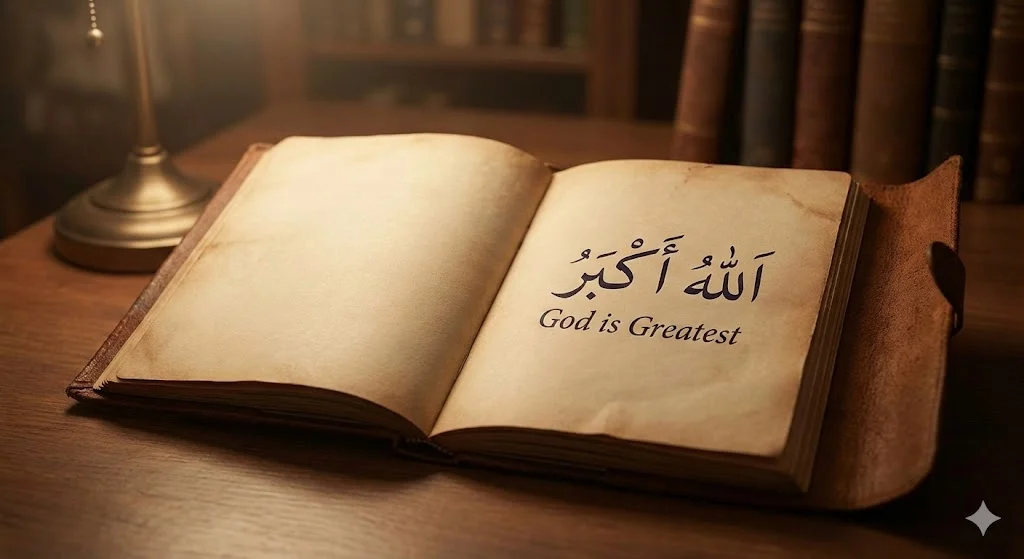
So, the literal Allahu Akbar translation is “God is Greatest.”
Literal vs. Figurative Meaning
While the literal meaning is straightforward, the figurative meaning is much deeper. It is an acknowledgment that:
- God’s power surpasses everything in existence.
- Human achievements and wealth are insignificant compared to divine greatness.
- Daily challenges and successes are under God’s control.
This dual meaning makes the phrase both a declaration of faith and a reminder of humility.
The Spiritual Meaning of Allahu Akbar
The phrase is not just words—it carries profound spiritual significance.
Connection to Faith
Saying Allahu Akbar in Islam strengthens a believer’s awareness of God. It is a reminder that:
- God is above all human limitations.
- Faith is reinforced in every utterance of the phrase.
- Moments of prayer or reflection become more meaningful.
H3: Expression of Gratitude
Muslims often say Allahu Akbar to express gratitude:
- Upon achieving a goal or milestone, people might say, “Allahu Akbar!”
- After recovering from an illness or overcoming a difficulty.
- Witnessing beauty in nature, like a sunrise or blooming flowers.
Expression of Humility
The phrase teaches humility:
- Humans are reminded that power, wealth, or fame are temporary.
- Everything ultimately belongs to God, reinforcing spiritual modesty.
Usage of Allahu Akbar in Daily Prayers
Prayer is central in Islam, and Allahu Akbar plays a vital role.
Role in Salah (Islamic Prayer)
- Muslims recite Allahu Akbar during Salah as Takbir.
- It marks transitions between prayer postures, such as standing, bowing, and prostrating.
- Each repetition reinforces God-consciousness during worship.
Takbir in Adhan (Call to Prayer)
- The Adhan, or Islamic call to prayer, begins and ends with Allahu Akbar.
- This emphasizes the phrase’s role in inviting worshippers to acknowledge God’s greatness.
- Example: In a city mosque, the Adhan reminds everyone, regardless of daily distractions, of God’s supremacy.
Allahu Akbar in Life Moments
The phrase extends beyond formal prayers and is integrated into daily life.
Celebrations
- Muslims often say Allahu Akbar during weddings, Eid festivals, and other joyous occasions.
- Example: A family celebrating a newborn might say it to express gratitude for blessings.
Relief or Safety
- After overcoming danger or hardship, people exclaim Allahu Akbar.
- Example: Surviving a car accident or natural disaster can inspire a heartfelt declaration of God’s greatness.
H3: Everyday Reminders
- Even in small moments, like finishing a difficult task, Allahu Akbar daily usage reminds believers that God’s support is ever-present.
Cultural Significance of Allahu Akbar
The phrase is deeply embedded in Muslim culture, extending beyond worship.
Art and Calligraphy
- Beautiful calligraphy of “ ” decorates mosques, homes, and religious texts.
- Artists convey the phrase’s spiritual beauty visually, highlighting phrase meaning through art.
Literature and Poetry
- Writers and poets use in literature to reflect devotion, awe, and reverence.
- Example: Classical Islamic poetry often celebrates God’s greatness through this phrase.
Global Recognition
- Across the world, hearing evokes a sense of faith and respect in Muslim communities.
- It has become an audible symbol of Islamic identity, recognized even outside religious contexts.
Common Misconceptions About Allahu Akbar
Association With Violence
- Media often misrepresents the phrase, connecting it to terrorism.
- Allahu Akbar in Islam is fundamentally peaceful and spiritual.
- Misuse by extremists does not reflect the true meaning of Allahu Akbar.
Misunderstanding Literal Meaning
- Many hear it as “God is Greatest” but fail to grasp its figurative significance.
- Correct understanding emphasizes gratitude, humility, and reverence, not aggression.
Historical Context of Allahu Akbar
Origins in Islamic Texts
- The phrase appears in the Qur’an and Hadith, showing its central importance in Islamic worship.
Use in Battles
- Historically, warriors recited before battles for courage and divine reliance.
- Example: Early Islamic armies used it as a morale booster, emphasizing trust in God’s power.
Evolution Over Time
- Over centuries, the phrase became integral to prayers, celebrations, and public expressions of faith.
- Its historical significance underscores the continuity of Islamic traditions.
How to Use Allahu Akbar Respectfully
During Prayer
- Recite during Salah with sincerity and mindfulness.
In Daily Life
- Use it to express awe, gratitude, or reliance on God.
- Avoid trivial or inappropriate contexts to maintain respect for the sacred phrase.
In Teaching
- Parents and educators can explain what does mean to children.
- Teaching both literal and spiritual significance ensures proper understanding.
Comparisons With Other Religious Expressions
Christianity
- Similar phrases like “Praise the Lord” or “God is great” also express reverence and gratitude.
Judaism
- “Baruch Hashem” (Blessed be God) reflects acknowledgment of divine greatness.
- Across Abrahamic religions, phrases like in Islam emphasize God’s supreme authority.
Common Mispronunciations and Correct Pronunciation
- Correct: Al-lahu Ak-bar
- Common mistakes: Allah Akbar, Allahuakbar (without pauses)
- Proper pronunciation respects the phrase meaning.
Modern Usage of Allahu Akbar
Social Media and Entertainment
- The phrase appears in songs, movies, and online content.
- Correct usage promotes awareness of Islamic culture, while misuse can reinforce stereotypes.
Global Recognition
- Even outside religious contexts, hearing can evoke respect or curiosity about Islam.
Real-Life Quotes About Allahu Akbar
- “Saying reminds me daily that my struggles are never beyond God’s power.” – Islamic scholar
- “It’s not just words; it’s a feeling of awe and gratitude.” – Muslim community leader
- brings peace in my heart, even in the toughest moments.” – Everyday believer
One Liner FAQs
- Q: What does Allahu Akbar mean?
A: Allahu Akbar means “God is Greatest,” expressing God’s supreme power. - Q: When do Muslims say Allahu Akbar?
A: Muslims say it during prayers, celebrations, moments of gratitude, and relief. - Q: Is Allahu Akbar only used in prayer?
A: No, it’s also used in daily life, cultural events, and expressions of awe. - Q: Why do some people misunderstand Allahu Akbar?
A: Misuse by extremists and media portrayal leads to misconceptions. - Q: How is Allahu Akbar pronounced correctly?
A: It is pronounced as “Al-lahu Ak-bar,” with proper pauses for respect. - Q: Can non-Muslims use Allahu Akbar?
A: It’s best understood and respected; non-Muslims can learn its meaning without casual use.
conclusion
In conclusion, “Allahu Akbar” is far more than just a phrase; it is a powerful expression of faith, devotion, and acknowledgment of God’s supreme greatness.
Whether used in daily prayers, moments of joy, or times of reflection, it reminds believers of the infinite power and mercy of Allah.
