
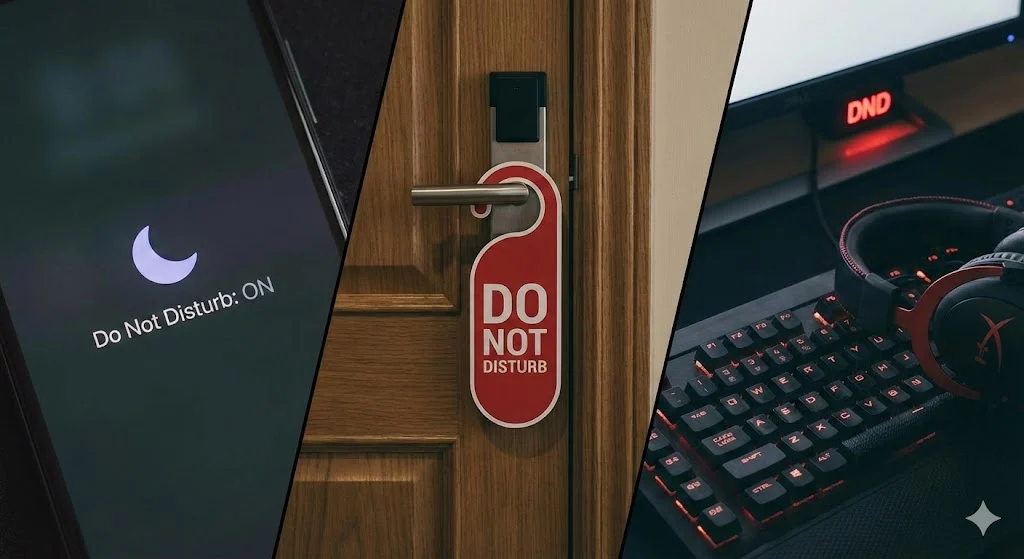

You know, the first time I saw “DND,” I froze for a second. I was chatting with a friend, everything was going smoothly, and suddenly they sent me a message saying, “I’m on DND.” For a moment, I thought something serious had happened. My mind started racing. Did I say something wrong? Did they get upset?
But then I took a deep breath and decided to figure it out instead of stressing. I still remember how I grabbed my phone, opened Google, and started searching like a detective trying to solve a mystery. That’s when I realized it wasn’t about me at all. It was simply a short, modern way of saying “Do Not Disturb.”
After that day, whenever someone says “DND,” I smile because I know exactly what they mean. And trust me, understanding this small abbreviation saved me from so many misunderstandings.
What Does DND Stand For?
The DND full form is Do Not Disturb. It’s a signal that you don’t want to be interrupted, either digitally or physically.
- On phones: Prevent notifications, calls, and messages from distracting you.
- At work: Helps colleagues know when you’re focused.
- In gaming: Indicates you’re busy or don’t want invites.
- In telecom: Stops spam calls and promotional messages.
Think of it as a digital “please do not disturb” sign—simple, but powerful.
DND in Mobile Phones and Technology
On smartphones, mode is one of the most useful features for reducing interruptions.
Key Features:
- Silent Without Missing Alerts: Notifications are hidden or muted, but important ones can get through.
- Customizable: You can allow calls from favorite contacts while blocking everything else.
- Scheduled Mode: Automatically turns on during sleep or meetings.
- Emergency Overrides: Alerts like alarms or repeated calls can bypass .
- Cross-Device Sync: Some ecosystems, like iOS and Google, sync DND across devices.
Real-Life Example: Imagine you’re working on a critical project. Activating Do Not Disturb mode ensures your phone won’t beep, letting you focus without constantly checking messages.
Suggested Visual: Screenshot of settings on iPhone or Android.
DND in Gaming
Gamers often use status to stay focused during intense gameplay.
Why It Matters:
- Prevents spam messages or invites mid-game.
- Indicates availability to teammates.
- Supports uninterrupted streaming or competitive play.
Example: On Discord, setting your status automatically blocks chat notifications, letting you concentrate on a boss fight without distractions.
DND in Workplace Communication
Professionals use DND mode to increase productivity and manage communication.
How It Helps:
- Shows “Do Not Disturb” status in tools like Slack or Microsoft Teams.
- Prevents unnecessary interruptions during meetings or focus hours.
- Auto-replies in email indicate delayed responses.
- Reduces digital burnout by limiting constant notifications.
Tip: Combine mode with calendar events so colleagues know when you’re unavailable automatically.
DND in Telecom and Customer Service
Telecom companies provide services to reduce unwanted calls and messages.
Benefits of Service:
- Blocks marketing calls and SMS.
- Lets you choose which messages to block (promotions, surveys, political).
- Ensures compliance with consumer protection laws.
- Reduces spam and improves privacy.
Example: Registering your number for stops promotional SMS from banks or stores without affecting calls from family or work.
How to Enable DND on Different Devices
Activating DND mode is easy and available across most devices:
- iPhone: Settings → Focus → Do Not Disturb
- Android: Settings → Sound & Vibration → Do Not Disturb
- Windows: Action Center → Focus Assist → Priority Only
- Mac: Control Center → Do Not Disturb
- Smartwatches: Quick settings menu
- Gaming Consoles: Xbox/PlayStation settings
- Apps: WhatsApp, Telegram, or email apps have chat-specific options
Tip: Schedule DND for sleep or work hours and customize exceptions for emergency contacts.
Suggested Visual: Diagram showing toggles on iPhone, Android, and Windows.
Common Misunderstandings About DND
Many people misunderstand DND meaning. Let’s clarify:
- does not mean offline: You can still receive notifications silently.
- It’s not permanent: You can enable it temporarily or schedule it.
- is more than silent mode: Unlike silent mode, it can filter notifications intelligently.
- Emergency alerts can bypass : You won’t miss critical alerts.
Tip: Always check your device’s settings to avoid missing important calls or messages.
Benefits of Using DND
Using mode effectively brings multiple advantages:
- Reduces stress and phone distractions
- Improves focus for work or study
- Enhances sleep quality
- Helps maintain privacy
- Supports digital wellbeing and mental health
- Prevents spam calls and messages
- Improves productivity
- Maintains work-life balance
Example: Activating Do Not Disturb mode during family dinner ensures quality time without checking your phone constantly.
FAQ About DND
Q1: Does DND block all calls?
A: No. You can allow important contacts or repeat calls to bypass DND mode.
Q2: Can DND be scheduled automatically?
A: Yes. Most devices allow automatic Do Not Disturb scheduling during meetings or sleep.
Q3: What’s the difference between DND and silent mode?
A: Silent mode only mutes sounds, while DND feature can block notifications selectively and allow exceptions.
Q4: Can DND stop spam messages?
A: Yes, telecom DND services help block promotional SMS and marketing calls.
Conclusion
In summary, DND means “Do Not Disturb”, and it’s more than just a phone feature—it’s a tool for focus, privacy, and digital wellbeing.
Whether you’re using it on your smartphone, gaming console, or workplace software, understanding DND meaning and DND mode can help you manage your time, reduce stress, and stay productive.
