
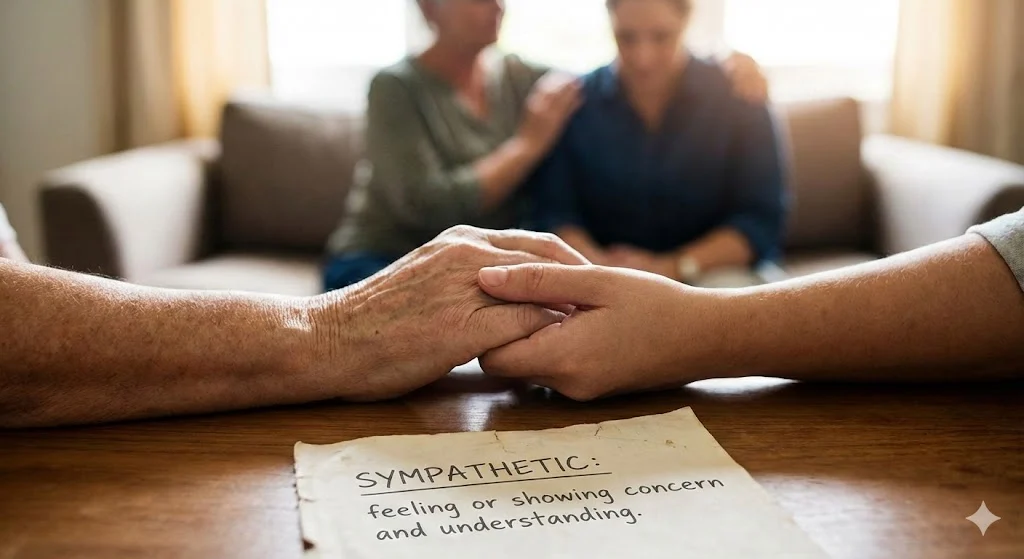

Have you ever gone through a moment where everything felt heavy, and all you needed was someone to understand not to judge, not to fix things, but simply to listen? I remember standing there, struggling with a problem I hadn’t shared with anyone.
When I finally spoke, the person in front of me didn’t interrupt. They didn’t offer advice right away. Instead, they looked at me and said, “I’m really sorry you’re going through this.” In that moment, I felt lighter.
Not because my problem disappeared, but because someone truly felt what I was feeling.That day taught me something powerful. Being sympathetic isn’t about saying big words or giving smart solutions.
What Does Sympathetic Mean in Text?
In everyday language, being sympathetic simply means you understand and care about someone’s feelings. In texts, it’s usually used when you want to show empathy or offer emotional support.
Example:
A: “I had such a rough day at work 😔”
B: “Oh no, I’m so sympathetic 😢 hope tomorrow’s better!”
In short:
Sympathetic = showing understanding or concern = caring and empathetic response.
Where Is Sympathetic Commonly Used?
You’ll most often see sympathetic in these places:
- 💬 Texting — when chatting with friends or family.
- 📱 Social Media — like Instagram or Facebook comments on someone’s sad post.
- 🎮 Gaming chats — if someone is venting about a tough match.
- 📝 Messaging apps — WhatsApp, Messenger, Snapchat.
Tone: Casual, friendly, and supportive. Not typically formal unless paired with professional language.
Examples of Sympathetic in Conversation
Here are some realistic ways people use sympathetic in chats:
Example 1:
A: “I missed the deadline 😭”
B: “I’m sympathetic, don’t worry too much 😅”
Example 2:
A: “My dog isn’t feeling well today 😢”
B: “Aww I’m sympathetic 😔 hope he gets better soon”
Example 3:
A: “I’m so stressed with exams”
B: “Totally sympathetic 😅 you got this”
Example 4:
A: “I just got rejected from my dream job 😞”
B: “I’m sympathetic, that’s rough 💔”
Example 5:
A: “Feeling lonely tonight”
B: “I feel sympathetic, wanna talk? 🫂”
When to Use and When Not to Use Sympathetic
✅ When to Use:
- Talking to friends or family
- Comforting someone who is sad or stressed
- Casual, empathetic chats
- Online comments showing support
❌ When Not to Use:
- Formal work emails
- Urgent professional situations
- Serious legal or medical advice
| Context | Example Phrase | Why It Works |
| Friend Chat | “No worries, I’m sympathetic 😄” | Casual & friendly |
| Work Chat | “I understand your concern” | Polite & professional |
| “We understand your situation” | Formal & clear |
Similar Slang Words or Alternatives
| Slang | Meaning | When to Use |
| Empathetic 😌 | Feeling what someone feels | Friend chats, support messages |
| Caring ❤️ | Showing kindness and support | Texts, social media |
| Understanding 🤝 | Getting someone’s perspective | Friendly, professional tone |
| Compassionate 💛 | Being considerate and gentle | Online or in-person advice |
FAQs About Sympathetic
Q1: Can I use sympathetic in casual texting?
A: Yes! It’s friendly and shows you care about the person’s feelings.
Q2: Is sympathetic flirty?
A: Not usually. It’s more about empathy than flirting.
Q3: Is it formal or casual?
A: Mostly casual/friendly, but it can be formal in professional emails if phrased carefully.
Q4: What’s the difference between sympathetic and empathetic?
A: Sympathetic is feeling concern for someone, empathetic is feeling what someone feels personally.
Q5: Can I use it in emojis?
A: Absolutely! Emojis like 😢, 🫂, or ❤️ make it warmer and more expressive.
Conclusion
Using sympathetic in texts is a simple way to show understanding and care. Whether responding to a friend’s tough day or commenting on social media, it conveys warmth and support.
Remember, it’s casual and friendly, perfect for everyday conversations but not for strict professional settings. Add a touch of emojis to make your sympathy feel more personal and genuine.
